Orthodox Christmas 2027: When It Is and Why It's January 7
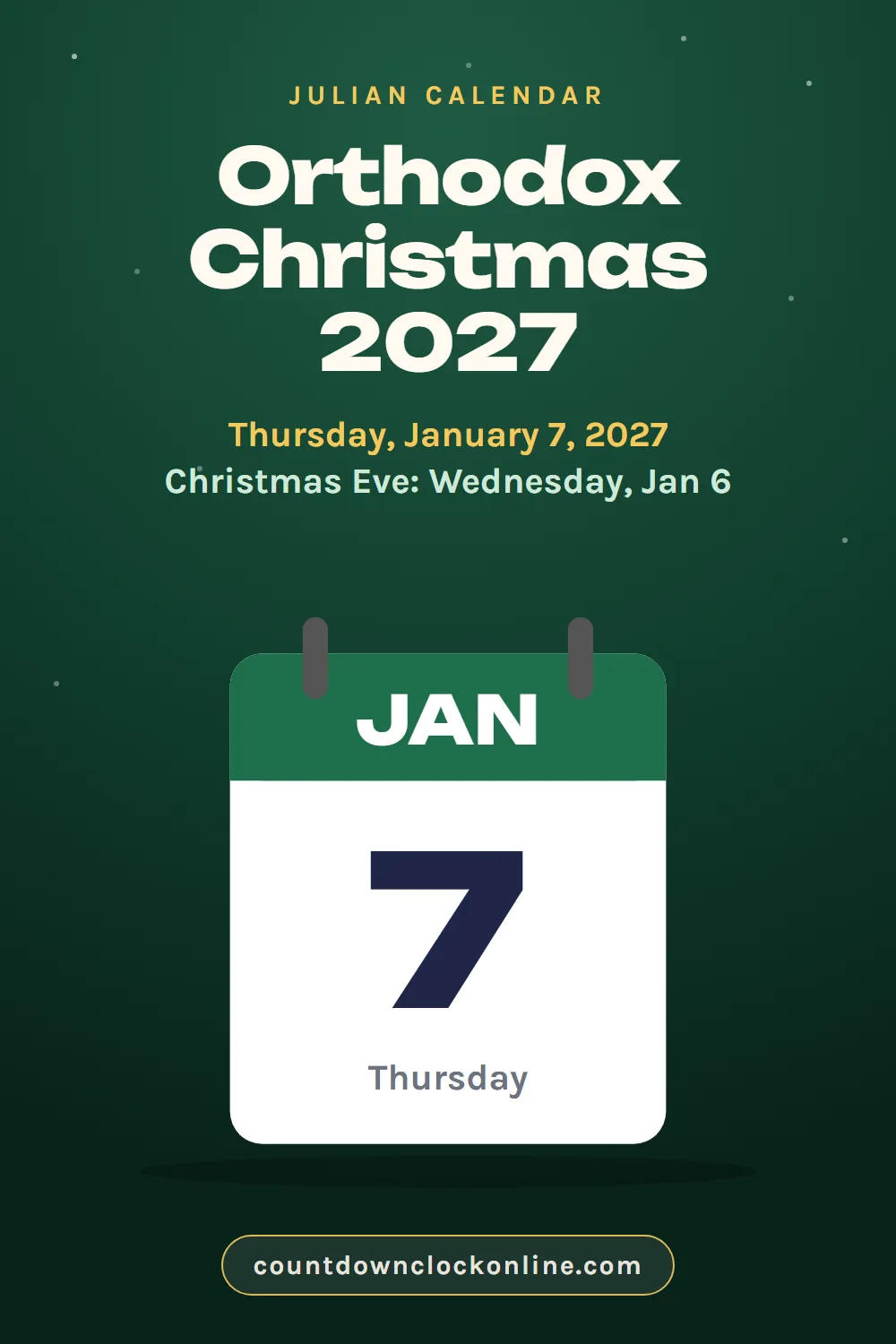
Orthodox Christmas 2027 is on Thursday, January 7, 2027. Orthodox Christmas Eve, often the most meaningful evening of all, falls on Wednesday, January 6. That's the date for churches that follow the older Julian calendar, including those in Russia, Serbia and Georgia, plus Coptic and Ethiopian Christians.
So if you've got Orthodox friends, family or coworkers, Christmas isn't over for them when the wrapping paper gets tossed on December 25. For many, the big day is still almost two weeks away.
Why is Orthodox Christmas on January 7?
Here's the short version: everyone is celebrating on December 25, just on different calendars.
Most of the world uses the Gregorian calendar, the one on your phone. It was introduced in 1582 to fix a small drift in the older Julian calendar, which adds a leap day a little too often. Over the centuries, that tiny difference piled up. Today the Julian calendar runs 13 days behind the Gregorian one.
Many Orthodox churches kept the Julian calendar for their feast days. So December 25 on the Julian calendar shows up as January 7 on ours. Same feast, same meaning, just counted differently.
A fun bit of trivia: the gap grows by a day every so often. Starting in 2101, Julian December 25 will land on January 8. That's a long way off, so January 7 is the date to remember for the rest of our lives.
Which churches celebrate on January 7, and which on December 25?
This is where it gets a little surprising. "Orthodox" doesn't mean one single date. Some Orthodox churches switched to a revised calendar for fixed feasts like Christmas, while others kept the Julian one. Here's a simple breakdown:
| Celebrates on January 7 | Celebrates on December 25 |
|---|---|
| Russian Orthodox Church | Greek Orthodox Church |
| Serbian Orthodox Church | Romanian Orthodox Church |
| Georgian Orthodox Church | Bulgarian Orthodox Church |
| Coptic Orthodox Church (Egypt) | Orthodox Church in America |
| Ethiopian and Eritrean Orthodox Churches (Genna) | Orthodox Church of Ukraine (since 2023) |
Ukraine is a gentle special case. Many Ukrainians moved Christmas to December 25 in 2023, while some parishes and families still keep January 7. If you're not sure which date a friend celebrates, it's completely fine to just ask. Most people are happy you thought of it.
In the US, you'll find both. A Greek Orthodox family down the street may have celebrated on December 25, while a Serbian or Russian Orthodox parish across town is getting ready for January 7.
Orthodox Christmas 2027 at a glance
| Day | Date |
|---|---|
| Orthodox Christmas Eve | Wednesday, January 6, 2027 |
| Orthodox Christmas Day | Thursday, January 7, 2027 |
| Orthodox Christmas last year | Wednesday, January 7, 2026 |
Notice that January 6 is also Three Kings Day (Epiphany) for many Western churches. So in a lot of mixed neighborhoods, January 6 is a busy, happy day for different reasons. If you're curious about that side of the season, our page on the Twelve Days of Christmas and Three Kings Day walks through it.
How do Orthodox families celebrate Christmas Eve?
For many Orthodox Christians, Christmas Eve is the heart of the holiday. Traditions vary a lot from country to country, and even from family to family, but a few are shared widely.
The Christmas fast
Many Orthodox Christians keep a Nativity Fast for about 40 days before Christmas, skipping meat and often dairy. On Christmas Eve itself, a lot of families eat very little or nothing at all during the day. Traditionally, they wait until the first star appears in the evening sky, a reminder of the star of Bethlehem, before sitting down to eat. Kids often take the job of watching out the window for it, which is a sweet little tradition all on its own.
The Holy Supper
In Ukrainian and many other Slavic homes, Christmas Eve dinner is called the Holy Supper. It's usually 12 meatless dishes, one for each of the twelve apostles. You might see borscht, varenyky (dumplings), mushrooms, cabbage rolls, fish, beans and stewed dried fruit.
The first dish is often kutia, a simple, lightly sweet mix of cooked wheat berries, honey and poppy seeds. Some families tuck a little hay under the tablecloth to remember the manger, and set an extra place at the table for loved ones who have passed away. After dinner, it's time for carols, and sometimes a late church service.
In Serbian homes, you may see a badnjak, a young oak branch brought inside on Christmas Eve, and on Christmas Day a round loaf called česnica with a coin baked inside. Whoever finds the coin is said to have good luck for the year.
Church services
Many families go to a long, candlelit service on Christmas Eve or very early on Christmas morning. In Coptic churches, a late-night Christmas Eve liturgy marks the end of the fast, and families often share a festive meal afterward.
What is Genna? Christmas in Ethiopia and Eritrea
Genna (you'll also see it spelled Ganna) is Christmas for Ethiopian and Eritrean Orthodox Christians, and it falls on January 7 too.
It usually comes after a long fast of several weeks. On Christmas Eve, many people wear white, often a soft cotton shawl, and attend a service that can last through the night, with candles, chanting and music. In the morning, families gather for a big meal to break the fast.
Genna is also the name of a traditional game a bit like field hockey, played with curved sticks and a small ball. It's linked to old Christmas stories, and it's often played on the holiday itself.
Want to see how other countries mark the season? Our page on Christmas countdown traditions around the world has plenty more.
Kind, simple ways to share the day
If Orthodox Christmas isn't your own tradition but it matters to someone you love, here are a few easy, respectful ways to show you care:
- Say it on the right day. A "Merry Christmas!" text on January 7 means a lot, especially after everyone else has moved on.
- Learn the greeting. Many Orthodox Christians say "Christ is born!" and answer "Glorify Him!" You don't have to use it, but knowing it is a nice touch.
- Mind the fast. If you're bringing food over before Christmas, a meatless dish is a thoughtful choice. When in doubt, ask.
- Keep January 6 and 7 open. If you schedule work events or kids' activities, try not to book them on Orthodox Christmas Eve and Day.
- Leave the lights up. Plenty of families keep decorations up through January 7 so the season feels complete.
How many days until Orthodox Christmas?
The countdown at the top of this page does the math for you, live, in your own time zone, right up to January 7. You can open it in the countdown maker to add your own title, pick a background and share it with family.
And if your house celebrates on December 25 instead, we've got you covered there too: here's how the December Christmas countdown works. After the holidays, the next big celebration on a lot of family calendars is Lunar New Year 2027 on February 6.
Frequently asked questions
When is Orthodox Christmas 2027?
Orthodox Christmas 2027 is on Thursday, January 7, 2027, for the churches that follow the Julian calendar. Orthodox Christmas Eve is Wednesday, January 6.
Why is Orthodox Christmas on January 7?
Those churches set their feast days by the older Julian calendar, which currently runs 13 days behind the Gregorian calendar most of the world uses. December 25 on the Julian calendar lands on January 7 on ours.
Do all Orthodox Christians celebrate Christmas on January 7?
No. The Greek, Romanian and Bulgarian churches and the Orthodox Church in America celebrate on December 25. Churches in Russia, Serbia and Georgia, Coptic churches, Ethiopian and Eritrean churches, and part of Ukraine's faithful celebrate on January 7.
What is Genna?
Genna (also spelled Ganna) is Christmas in Ethiopia and Eritrea, celebrated on January 7. It usually follows a long fast and an all-night church service, then a big family meal.
When was Orthodox Christmas 2026?
Orthodox Christmas 2026 was on Wednesday, January 7, 2026. The date stays January 7 each year on our calendar, while the weekday shifts.
How do you wish someone a merry Orthodox Christmas?
A simple "Merry Christmas" is always welcome. Many Orthodox Christians also greet each other with "Christ is born!" and answer "Glorify Him!"
Want your own countdown? Pick a date, a theme and a title, then share it.
Open the live countdown