The 7 Days of Kwanzaa: Dates, Principles and Family Ideas
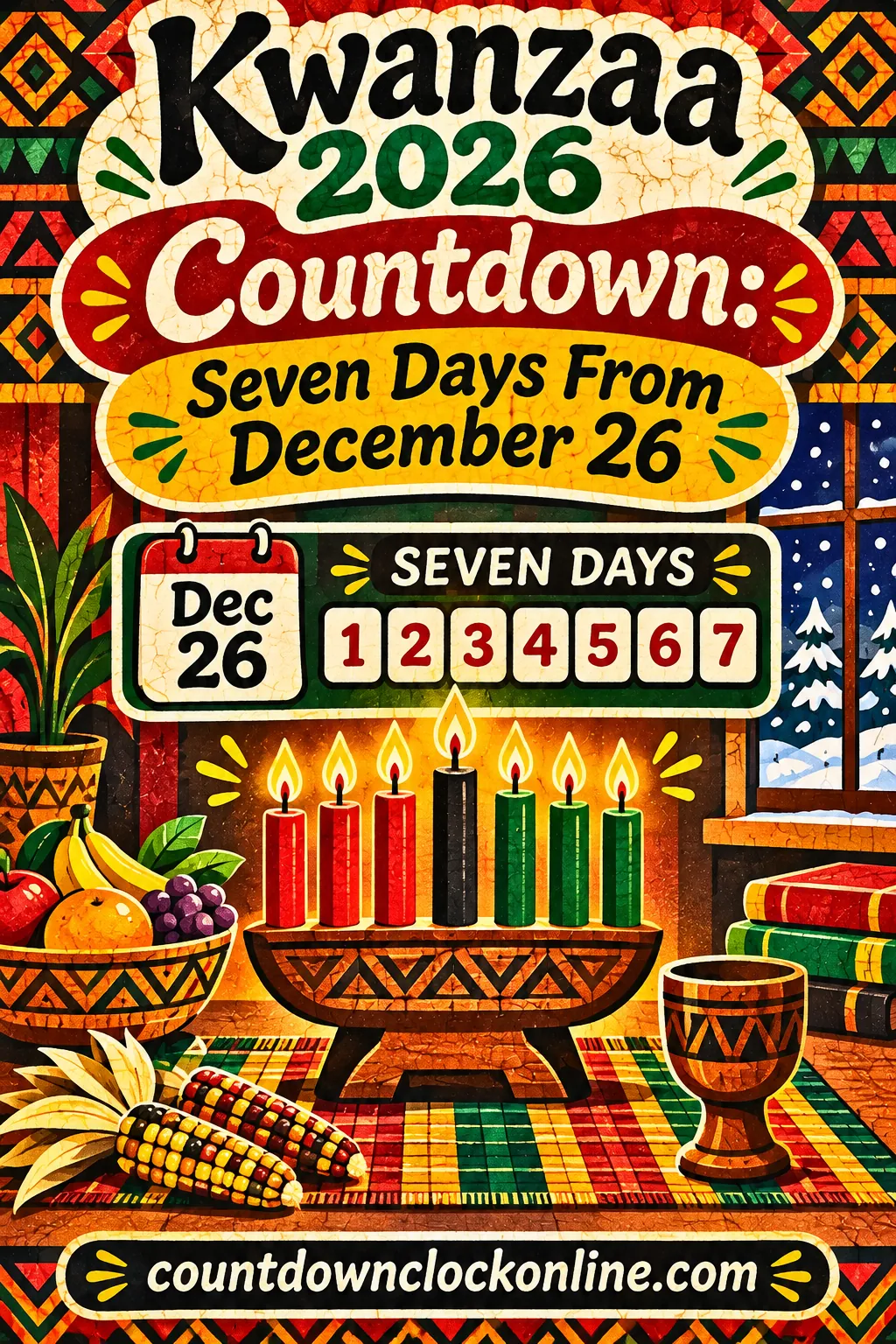
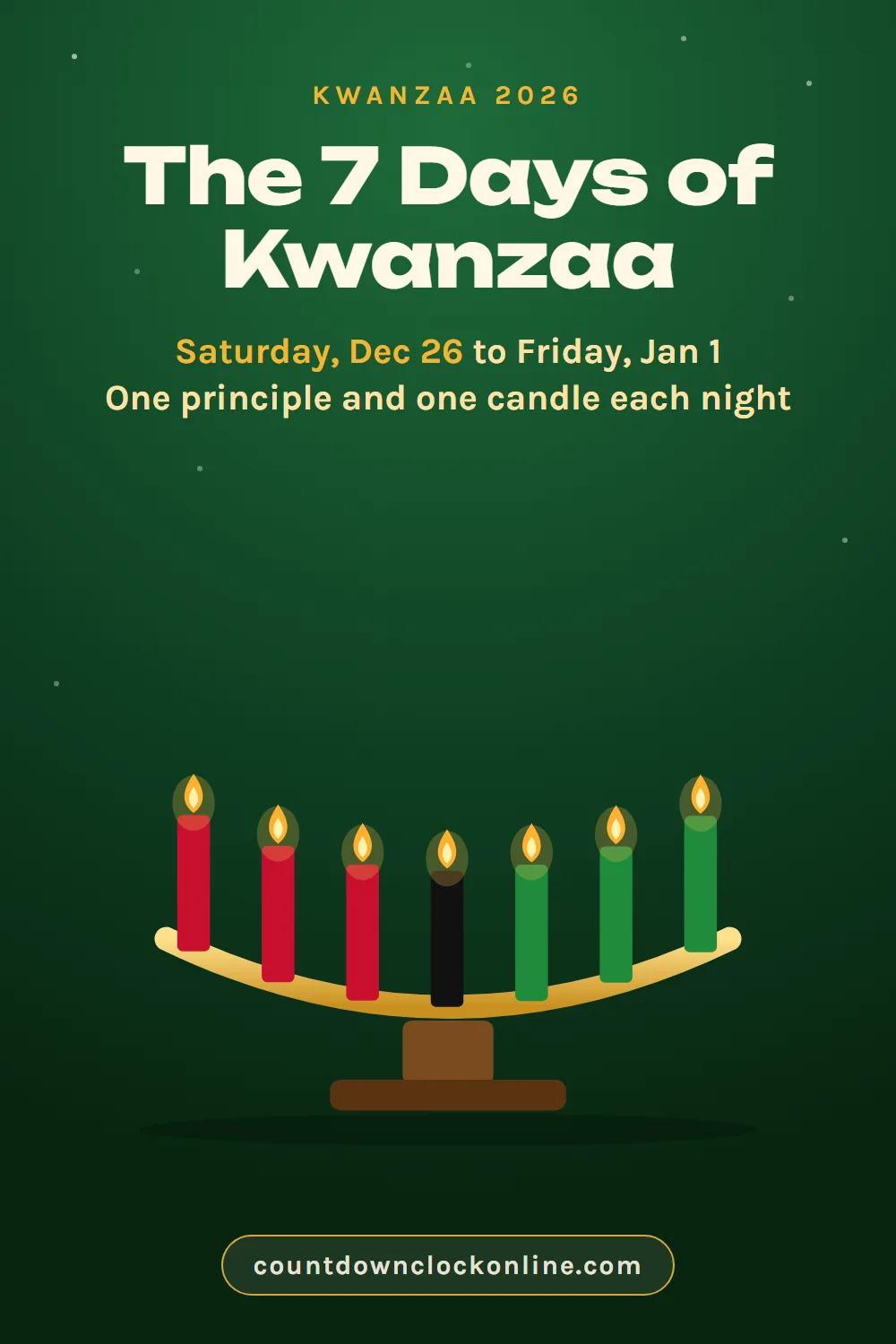
Kwanzaa lasts seven days, from December 26 to January 1, every year. In 2026 it starts on Saturday, December 26 and ends on Friday, January 1, 2027. Each day celebrates one of seven principles, called the Nguzo Saba, and a new candle is lit each evening.
Below you'll find every day's date for 2026, its principle, what it means in plain words, and a simple idea to try at home.
What is Kwanzaa?
Kwanzaa is a week-long celebration of African American culture, family and community. It was created in 1966 by Dr. Maulana Karenga. The name comes from the Swahili phrase "matunda ya kwanza," which means "first fruits," a nod to harvest festivals across Africa. That's also why the principles and symbols have Swahili names.
Kwanzaa is a cultural holiday, not a religious one. People of any faith can celebrate it, and many families celebrate it alongside Christmas or New Year's.
The 7 days of Kwanzaa 2026 at a glance
| Day | Date | Principle | In English |
|---|---|---|---|
| Day 1 | Saturday, December 26, 2026 | Umoja | Unity |
| Day 2 | Sunday, December 27, 2026 | Kujichagulia | Self-determination |
| Day 3 | Monday, December 28, 2026 | Ujima | Collective work and responsibility |
| Day 4 | Tuesday, December 29, 2026 | Ujamaa | Cooperative economics |
| Day 5 | Wednesday, December 30, 2026 | Nia | Purpose |
| Day 6 | Thursday, December 31, 2026 | Kuumba | Creativity |
| Day 7 | Friday, January 1, 2027 | Imani | Faith |
The Karamu, the big Kwanzaa feast, is held on December 31.
Each day of Kwanzaa, explained
Day 1: Umoja (unity), Saturday, December 26
What it means: sticking together. Umoja is about unity in the family, the community and the wider Black community.
Try this: start the week with a family meal where everyone sits down together, phones away. Go around the table and share one thing you love about your family.
Day 2: Kujichagulia (self-determination), Sunday, December 27
What it means: defining yourself, naming yourself and speaking for yourself, instead of letting others decide who you are.
Try this: have each person write down one goal for the new year and one word that describes who they want to be. Kids can draw theirs.
Day 3: Ujima (collective work and responsibility), Monday, December 28
What it means: building and caring for your community together, and treating each other's problems as shared problems.
Try this: do a job together that helps someone else. Shovel a neighbor's walk, pick up litter at a local park, or help at a food pantry.
Day 4: Ujamaa (cooperative economics), Tuesday, December 29
What it means: building and supporting businesses in your own community, and sharing in what they create.
Try this: shop at a Black-owned bookstore, bakery or restaurant near you, or pick a family gift from a local maker. Talk about why it matters where your money goes.
Day 5: Nia (purpose), Wednesday, December 30
What it means: making it everyone's shared job to build up the community, so your people can reach the greatness of their history.
Try this: share family history. Ask the oldest relative you can reach (in person or on the phone) to tell a story about growing up. Write it down or record it.
Day 6: Kuumba (creativity), Thursday, December 31
What it means: using your creativity to leave your community more beautiful and better than you found it.
Try this: this is also the night of the Karamu feast, so get creative together. Decorate the table with handmade place cards, perform a poem or song, or make art from things you already have.
Day 7: Imani (faith), Friday, January 1
What it means: believing in your people, your parents, your teachers and leaders, and in the rightness of your shared struggle.
Try this: on New Year's Day, have each person write a note to someone they believe in. It's a calm, hopeful way to close the week.
How is Kwanzaa celebrated?
Every family does it a little differently, but most celebrations share a few things:
- The kinara. A candleholder with seven candles (mishumaa saba): one black in the center, three red on one side and three green on the other. The black candle is lit on the first night, and one more is added each night after that.
- "Habari gani?" This Swahili greeting means "What's the news?" During Kwanzaa, the answer is that day's principle. On December 26, you'd answer "Umoja!"
- The mkeka. A woven mat that the other symbols rest on.
- Mazao and muhindi. Fruits and vegetables (for the harvest) and ears of corn, often one for each child in the family.
- The unity cup. The kikombe cha umoja is shared to honor ancestors.
- Zawadi. Gifts, usually given on the last day. They're often handmade or something that teaches, like a book.
- The Karamu. A feast on December 31 with food, music, dancing and storytelling.
Easy family ideas for all seven days
You don't need to do everything to make Kwanzaa meaningful. A few small habits go a long way:
- Light the kinara at the same time each evening. Dinnertime works well. Let a different family member light the candle each night.
- Keep a principle jar. Write each principle on a slip of paper and read one aloud each night before you talk about it.
- Read together. Picture books about Kwanzaa and African American history make great nightly reads, and great zawadi too.
- Make it a potluck. For the Karamu, invite friends and family to bring a dish that means something to them.
Need a countdown for the family? Our Kwanzaa 2026 countdown counts the days until December 26. And since the holidays pile up this time of year, our holiday countdown ideas and our guide to New Year traditions around the world are good company for the last night of Kwanzaa. If your family also marks the season with the 12 days of Christmas, you'll notice they overlap the whole week.
How many days until Kwanzaa?
The clock at the top of this page counts down to December 26, live, in your time zone. It resets every year, so you can bookmark it. Want to put your family name on it, or show it on the TV during the Karamu? Open it in the full countdown maker and pick a theme you like.
Frequently asked questions
What are the 7 days of Kwanzaa?
Kwanzaa runs from December 26 to January 1. The days honor Umoja (unity), Kujichagulia (self-determination), Ujima (collective work and responsibility), Ujamaa (cooperative economics), Nia (purpose), Kuumba (creativity) and Imani (faith).
When does Kwanzaa start in 2026?
Kwanzaa 2026 starts on Saturday, December 26, and ends on Friday, January 1, 2027.
What day is the Kwanzaa feast?
The Karamu feast is held on December 31, the sixth day of Kwanzaa, which honors Kuumba (creativity).
Who started Kwanzaa?
Dr. Maulana Karenga created Kwanzaa in 1966 as a celebration of African American culture, family and community.
Is Kwanzaa a religious holiday?
No. Kwanzaa is a cultural holiday, so people of any faith can celebrate it, and many families celebrate it alongside Christmas or New Year's.
What do you say on each day of Kwanzaa?
A common greeting is "Habari gani?", Swahili for "What's the news?" The answer is that day's principle, such as "Umoja!" on December 26.
Want your own countdown? Pick a date, a theme and a title, then share it.
Make your own countdown